

From Concept to Completion How Collaborative Interior Design Supports Renovations & New Builds in NSW

Renovating or building a home is one of the most significant projects a homeowner will undertake. It involves financial investment, technical decisions, coordination between professionals and a large number of design choices that all influence the final outcome.
When interior design is introduced late in the process — after plans are locked in or trades are engaged — homeowners often face unnecessary delays, design compromises and expensive variations. Collaborative interior design takes a different approach.
At Findlay & Co., design thinking is integrated early into the renovation or new build journey. By working closely with homeowners, builders and architects, we help ensure spatial planning, materials, documentation and construction sequencing align from the beginning.
This guide explains how a collaborative interior design process works, what happens between concept and completion, and how early design integration can support smoother renovations across NSW.
In This Guide
- What collaborative interior design actually means
- Why renovations struggle without design integration
- The Findlay & Co collaborative design process
- How designers work alongside builders
- How documentation reduces construction delays
- A real renovation example from NSW
- FAQs homeowners ask before starting a renovation
“The earlier design thinking is integrated into a renovation, the fewer costly changes occur during construction.”
What Collaborative Interior Design Actually Means
The phrase collaborative interior design is often used casually, but in renovation projects it has a very specific meaning. At its core, collaboration means aligning the vision of the homeowner with the realities of architecture, construction and everyday living. Rather than focusing only on aesthetics, collaborative design considers:
- How a home will function long term
- How materials will perform over time
- How design decisions interact with structural constraints
- How selections integrate with construction timelines
Interior design becomes part of the planning and building process, not something applied after construction has already begun. Across many NSW homes — particularly renovations of houses built in the 1980s and 1990s — layout limitations, structural constraints and outdated spatial planning often require thoughtful reconfiguration. When these considerations are addressed early, projects move forward with far greater clarity.
Why Renovations Struggle Without Early Design Integration
One of the most common causes of renovation stress is late-stage decision making.
When homeowners are asked to make material or layout decisions once construction has already started, several challenges arise:
- trades pause while selections are finalised
- materials are ordered too late
- design ideas conflict with structural limitations
- budgets shift unexpectedly
Industry renovation studies frequently highlight that budget overruns are often caused by late design changes and insufficient early planning.
Early design integration prevents many of these issues by ensuring that major decisions are resolved before construction pressure begins.
When design is considered early:
- Joinery can be properly planned
- Lighting layouts align with room use
- Material selections integrate across spaces
- Builders receive clear documentation
The result is a project that feels organised rather than reactive.
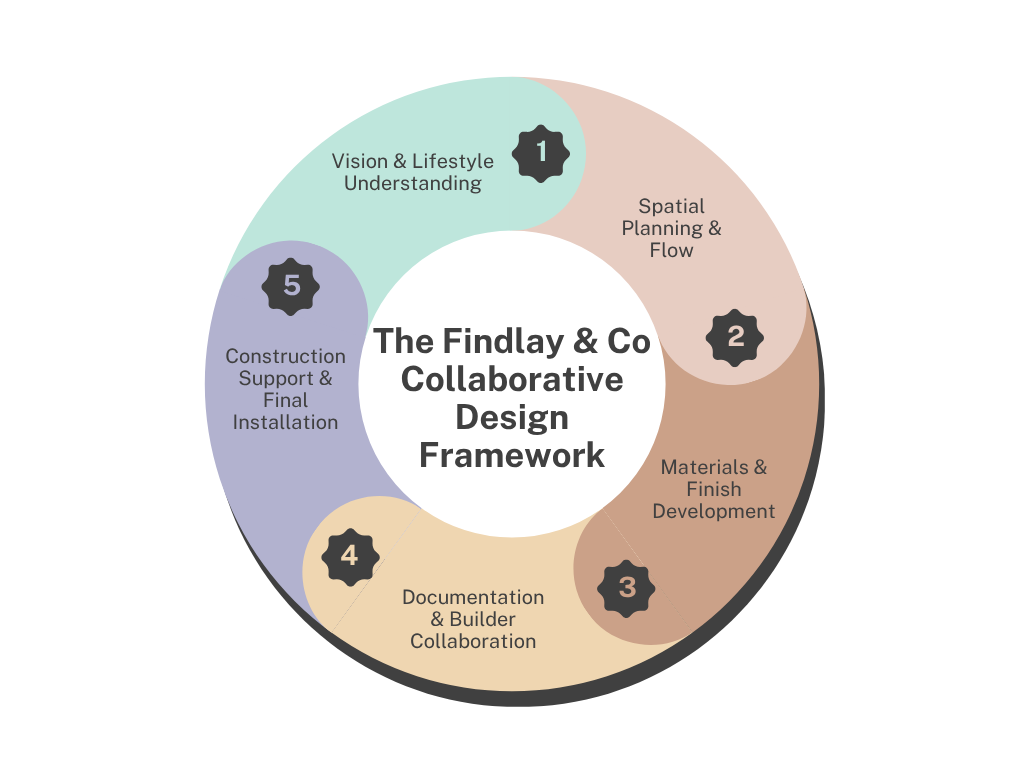
The Findlay & Co Collaborative Design Framework
Every project has its own unique story, but most renovations and new builds follow a similar design framework.
Below is the collaborative process we typically guide clients through.
Stage 1: Vision & Lifestyle Understanding
Every project begins with people. Before discussing finishes or furniture, we explore how the home should function for the people living in it.
Key questions include:
- How do you currently use the space?
- What frustrations exist within the layout?
- How might your needs evolve in the future?
- What budget framework supports the project?
Understanding lifestyle first ensures the design reflects real living rather than simply visual inspiration.
Stage 2: Spatial Planning & Flow
Once the project vision is clear, spatial planning begins. This stage focuses on:
- circulation through the home
- room relationships and proportions
- storage planning
- kitchen and joinery layout
- connection between indoor and outdoor areas
In renovation projects especially, spatial planning can significantly improve how a home feels and functions without dramatically increasing the footprint. Resolving layout decisions early prevents costly structural adjustments later in the project.
Stage 3: Materials & Finish Development
With spatial planning established, attention turns to materials and finishes. This stage includes selecting elements such as:
- flooring
- joinery finishes
- tiles and stone
- lighting fixtures
- tapware and hardware
- paint colours
Material selections are considered not only for aesthetics, but also for durability, longevity and maintenance. A cohesive material palette ensures the home feels layered and intentional rather than disconnected from room to room.
Stage 4: Documentation & Builder Collaboration
Documentation is one of the most important and often overlooked aspects of renovation design.
Clear documentation may include:
- joinery drawings
- lighting and electrical schedules
- fixture specifications
- material schedules
- elevations and layout details
These documents provide builders and trades with the clarity needed to execute the design accurately. Without documentation, decisions often need to be made on site under time pressure, which increases the likelihood of delays or variations.
Stage 5: Construction Support & Final Installation
During construction, design decisions occasionally require clarification or adjustment. Our role may involve:
- reviewing design details with builders
- answering technical questions
- ensuring materials align with documentation
- guiding final styling and installation
As the project nears completion, furniture, lighting and styling layers bring the space together. The result is a home that feels cohesive, functional and deeply personal.
How Designers Work Alongside Builders
A successful renovation relies on strong collaboration between designer and builder. Rather than working in isolation, designers support builders by providing:
- clear design documentation
- early material selections
- coordinated lighting and electrical planning
- clarification of design intent
This reduces uncertainty during construction and allows builders to maintain momentum on site. Homeowners benefit from this collaboration because communication becomes more streamlined and decisions are resolved earlier.
Case Example: A Hunter Region Renovation
In a recent Hunter region renovation, a growing family wanted to transform a dated 1990s home into a more open and functional living environment.
Rather than focusing first on cosmetic updates, the project began with spatial planning. By adjusting circulation pathways, relocating key joinery elements and planning layered lighting early in the process, several potential construction challenges were avoided.
Because the design documentation was prepared before construction began:
- joinery was fabricated accurately
- lighting positions aligned with cabinetry
- trades progressed without unnecessary delays
The final result felt cohesive not simply because of material choices, but because every decision had been considered within the broader context of the renovation.
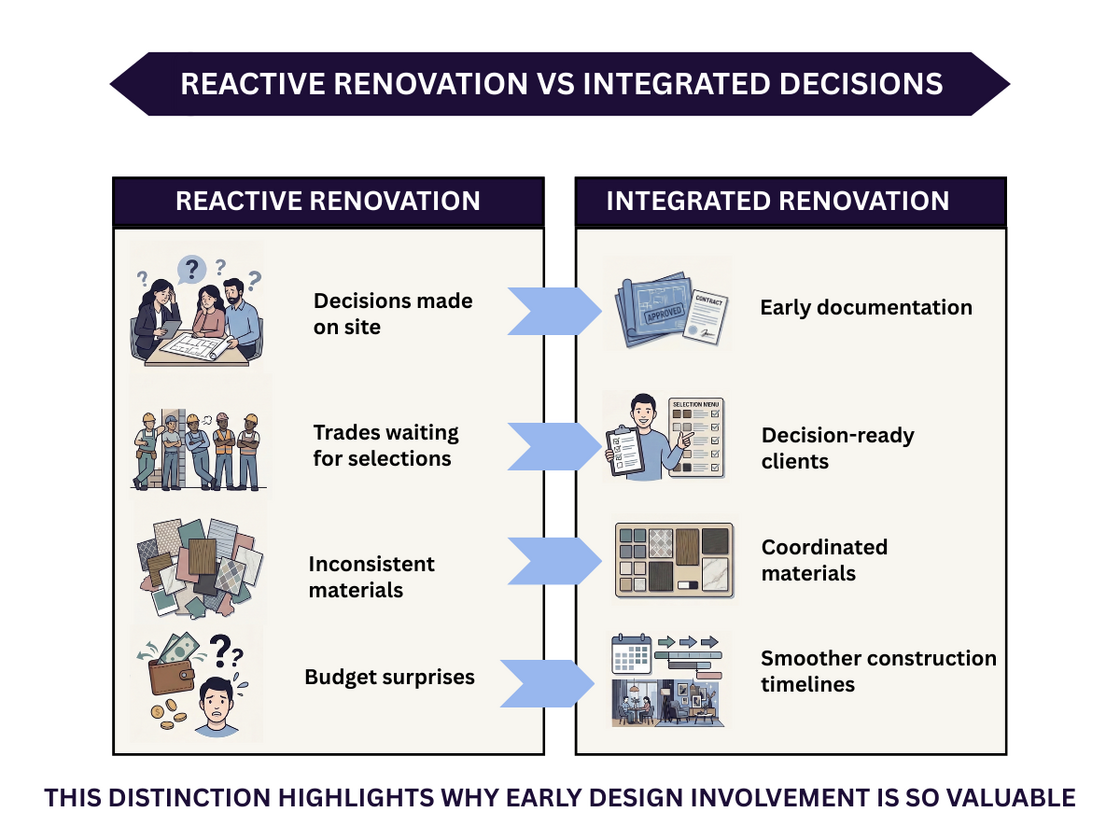
Early Clarity vs Reactive Renovation Decisions
Reactive Renovation
- decisions made on site
- trades waiting for selections
- inconsistent materials
- budget surprises
Integrated Renovation
- early documentation
- decision-ready clients
- coordinated materials
- smoother construction timelines
Frequently Asked Questions
When should I engage an interior designer during a renovation?
The earlier, the better. Ideally, a designer should be involved before trades are engaged and at the same time you appoint an architect if one is involved.
In many projects, design input before council submission allows spatial flow and functionality to be reviewed before plans are finalised. Early clarity reduces redesign and prevents costly changes later.
Do interior designers work directly with builders?
Yes. In collaborative projects designers communicate with builders to clarify materials, documentation and design intent so construction progresses smoothly.
Can interior design help reduce renovation delays?
Clear documentation and early decision making reduce the need for on-site changes, which helps maintain construction timelines.
Do I need an interior designer if I already have an architect?
Architects focus on structure and form, while interior designers refine functionality, materials and the lived experience of the space. The two roles complement each other.
Design Is Not Decoration
Renovation success is rarely determined by finishes alone. It is determined by early clarity, integrated thinking, confident decisions and strong collaboration. Early clarity means understanding how a home should function, what constraints exist and how design choices align with budget and lifestyle. Integrated thinking ensures design decisions align with architecture, materials and long-term use. Confident decisions happen when options are explored thoroughly so homeowners feel certain about the direction of the project. And collaboration ensures that everyone involved — homeowner, designer, architect and builder — works toward a shared outcome. When these elements align, the renovation journey becomes far more enjoyable and the finished home feels thoughtfully resolved.
Considering a Renovation or New Build?
Findlay & Co works with homeowners across the Hunter Region, Newcastle, and throughout NSW to guide projects from initial concepts through masterful execution. Explore our complete Interior Design Services page to learn about our collaborative process.
If you are planning a renovation or new build and would like expert clarity or validation on your choices before construction begins, we invite you to discover our Design Decisions Intensive. For more information on how we work, please visit our FAQ page.
Ready to discuss your vision? We invite you to book a free discovery call to take the first step.
About Naomi Findlay
Naomi Findlay is the founder of Findlay & Co, a collaborative interior design studio working across the Hunter Region and NSW. With more than 15 years of experience in residential renovations, new builds and boutique commercial interiors, Naomi specialises in helping homeowners make confident design decisions while supporting smooth construction outcomes.
Want to know more about our services? Leave your details below