

What Interior Designers Actually Do During a Renovation in NSW
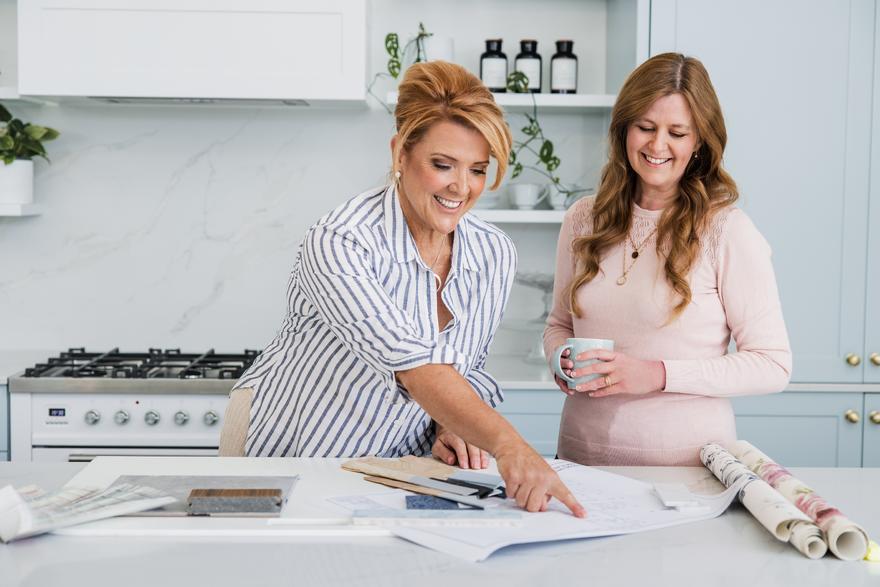
Most homeowners hire an interior designer expecting mood boards and paint colours. What they don't expect — and what makes the real difference — is everything that happens behind the scenes during a renovation. From spatial planning and documentation to builder coordination and on-site decision-making, an interior designer's role during a renovation in NSW is far more structural than most people realise. This article breaks down exactly what a collaborative interior designer does at each stage of a renovation project, why it matters for your timeline and budget, and how working with the right designer can be the difference between a renovation that runs smoothly and one that doesn't.
TABLE OF CONTENTS
- The Misconception About What Designers Actually Do
- Stage 1: Vision, Feasibility and Spatial Strategy
- Stage 2: Design Development and Documentation
- Stage 3: Material Selections and Supplier Coordination
- Stage 4: Builder Collaboration and Construction Support
- Stage 5: Installation, Styling and Handover
- A Real-World Example: Hunter Region Renovation
- Why Documentation Is the Unsung Hero of Every Renovation
- FAQ: Interior Designers and Renovations in NSW
- Ready to Start Your Renovation?
THE MISCONCEPTION ABOUT WHAT DESIGNERS ACTUALLY DO
There's a version of interior design that lives on Instagram — the reveal, the before-and-after, the perfectly styled shelf. And while that's a real part of the work, it's the last five percent.
The other ninety-five percent? That's where renovations are won or lost.
In NSW, where renovation projects can range from a single-room refresh in a Newcastle terrace to a full new build in the Hunter Valley, the role of an interior designer is deeply practical. It's about making decisions early, documenting them clearly, and communicating them in a way that builders can actually use.
At Findlay & Co., we work alongside homeowners through every stage of that process — not just at the beginning when everything feels exciting, and not just at the end when the furniture arrives. We're there in the middle, where the real work happens.
THE 5-STAGE COLLABORATIVE DESIGN PROCESS
STAGE 1: VISION, FEASIBILITY AND SPATIAL STRATEGY
Before a single tile is chosen or a paint colour considered, the first job of a collaborative interior designer is to understand how you actually live.
This means asking questions that go beyond aesthetics:
- How does your family move through the home on a typical morning?
- Where does clutter accumulate, and why?
- Which rooms do you avoid, and what makes them feel wrong?
- What does "feeling good in your home" actually mean to you?
This stage is about spatial strategy — understanding the flow of a home before committing to any layout decisions. In NSW renovations, this is particularly important because many homes, especially older properties in Newcastle, Maitland, and the Hunter Region, have layouts that made sense in a different era but don't serve modern family life.
What this looks like in practice:
- A detailed design brief developed collaboratively with the client
- Spatial flow analysis — how rooms connect and how people move between them
- Feasibility review of the client's wishlist against their budget and structural constraints
- Early conversations with the builder about what's possible before design decisions are locked in

STAGE 2: DESIGN DEVELOPMENT AND DOCUMENTATION
This is where the vision becomes a plan and where the quality of a designer's work either supports or undermines the entire build.
Design documentation is the language between the designer and the builder. When it's clear, specific, and complete, the builder can work confidently. When it's vague or missing, the builder has to make decisions that should have been made by the designer — and those decisions are often costly to reverse.
What good documentation includes:
- Detailed floor plans with dimensions and spatial notes
- Reflected ceiling plans (lighting, fan, and exhaust positions)
- Wet area drawings for bathrooms, laundry, and kitchen
- Joinery elevations for cabinetry, built-ins, and storage
- Finish schedules specifying every surface material, colour, and product code
- Electrical and plumbing point locations
- Window and door schedules
According to Houzz renovation research, poor planning and unclear documentation are among the most common causes of budget overruns and timeline delays in residential projects. This is not a small problem — it's the central problem in most renovations that go wrong.
STAGE 3: MATERIAL SELECTIONS AND SUPPLIER COORDINATION
Material selection is where most homeowners feel most overwhelmed and where a designer's experience pays for itself many times over.
It's not just about choosing what looks beautiful. It's about understanding:
- Longevity: Will this material still look good in ten years, or will it date?
- Maintenance: Is this finish practical for how this family actually lives?
- Sustainability: Where does this material come from, and how does it perform over time?
- Lead times: Is this product available in time for the construction schedule?
- Compatibility: Do these materials work together as a cohesive system?
At Findlay & Co., we approach material selection as a collaborative process. We don't present a finished board and ask you to approve it. We work through the decisions with you, explaining the reasoning behind each choice so you understand not just what we're recommending, but why.
What this stage involves:
- Sourcing and presenting material options across all finish categories
- Coordinating with suppliers on availability, lead times, and pricing
- Creating a complete selections schedule that feeds directly into the builder's documentation
- Managing sample reviews and client sign-off at each stage
STAGE 4: BUILDER COLLABORATION AND CONSTRUCTION SUPPORT
This is the stage that separates a decorator from a designer.
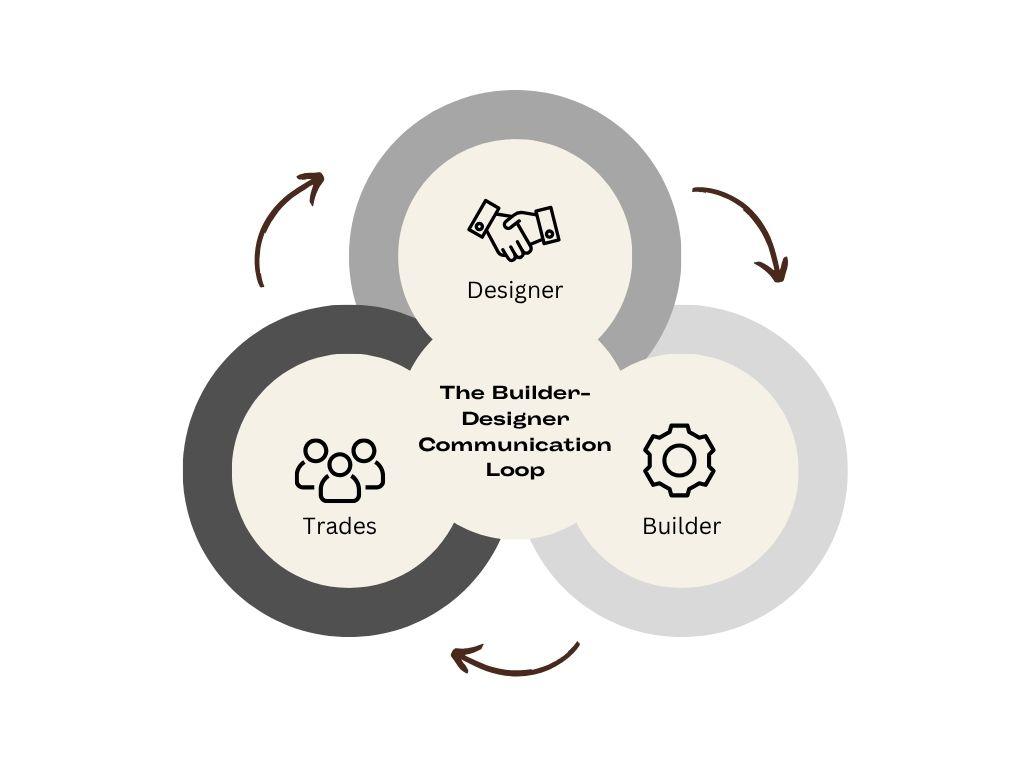
During construction, an interior designer's role is to be the bridge between the design intent and what actually gets built. This means being available, being clear, and being proactive about catching issues before they become expensive problems.
What builder collaboration looks like:
- Regular site visits at key construction milestones
- Responding to builder RFIs (Requests for Information) promptly and clearly
- Reviewing shop drawings and supplier submittals for compliance with the design
- Making on-site decisions when conditions differ from what was planned
- Coordinating between trades — tiler, electrician, cabinetmaker, plasterer — to ensure sequencing is correct
- Flagging potential issues before they're built in
In NSW, where many renovation projects involve a mix of local trades and regional suppliers, clear communication between the designer and builder is essential. A designer who understands construction sequencing — who knows that the waterproofing needs to be inspected before the tiler arrives, or that the cabinetmaker needs confirmed appliance dimensions before fabrication begins saving the builder time and the client money.
STAGE 5: INSTALLATION, STYLING AND HANDOVER
The final stage is where the design comes to life and where the work of every previous stage either pays off or reveals its gaps.
Installation coordination involves managing the delivery and placement of furniture, lighting, soft furnishings, and decorative elements in a sequence that makes sense for the build schedule. Styling is the final layer — the considered placement of objects, art, plants, and textiles that makes a space feel finished and inhabited rather than just complete.
What handover looks like at Findlay & Co:
- A final walkthrough with the client to review every element against the original brief
- A defects list for any items that need attention from the builder or supplier
- A care and maintenance guide for key materials and finishes
- A record of all product specifications for future reference
This is also the moment where the collaborative nature of the process matters most. Because we've worked alongside you through every stage, the finished space isn't a surprise it's a realisation of decisions you were part of making.
A REAL-WORLD EXAMPLE: HUNTER REGION RENOVATION
In a recent whole-home renovation in the Hunter Region, our clients came to us with a 1970s brick home that had been extended twice and felt disconnected — rooms that didn't flow, a kitchen that faced the wrong direction, and a master bedroom that felt like an afterthought.
The project involved:
- A full spatial reorganisation of the ground floor
- New kitchen, bathrooms, and laundry
- Replacement of all flooring, joinery, and lighting
- A new outdoor connection through the rear living area
What made the project work wasn't the material selections (though those were carefully considered). It was the documentation. Every trade arrived on site knowing exactly what was expected of them. The builder had a complete finish schedule before demolition began. The cabinetmaker had confirmed dimensions three weeks before fabrication. The tiler had a detailed wet area drawing with every grout joint specified.
The project came in on time and within budget. Not because nothing went wrong but because the documentation gave everyone the information they needed to solve problems quickly.
WHY DOCUMENTATION IS THE UNSUNG HERO OF EVERY RENOVATION
If there's one thing that separates a renovation that runs smoothly from one that doesn't, it's documentation.
Not the mood board. Not the material selections. The documentation.
Clear, complete, construction-ready documentation:
- Reduces the number of decisions that have to be made on-site under pressure
- Gives the builder confidence to proceed without waiting for designer input at every turn
- Creates a paper trail that protects both the client and the builder if disputes arise
- Ensures that what gets built matches what was designed
At Findlay & Co., documentation is not an afterthought. It's a core deliverable, the thing we spend the most time on, because it's the thing that has the most impact on how your renovation actually goes.
FAQ: INTERIOR DESIGNERS AND RENOVATIONS IN NSW
Q: What does an interior designer actually do during a renovation?
A: An interior designer manages the design process from spatial planning and documentation through to material selections, builder coordination, and final styling. Their role is to translate your vision into a clear, buildable plan and to support the construction process so that what gets built matches what was designed.
Q: When should I hire an interior designer for my renovation?
A: As early as possible — ideally before you've engaged a builder. The earlier a designer is involved, the more influence they can have on spatial decisions, documentation quality, and material lead times. Bringing a designer in after construction has started limits what's possible.
Q: Do interior designers work directly with builders in NSW?
A: Yes. At Findlay & Co., working alongside builders is a core part of our process. We provide construction-ready documentation, respond to builder queries promptly, and attend site at key milestones to ensure the design intent is being realised correctly.
Q: How does an interior designer help with renovation budgets?
A: By making decisions early and documenting them clearly, a designer reduces the number of costly variations that arise during construction. They also bring supplier relationships and product knowledge that can help clients access better pricing and avoid expensive mistakes.
Q: What's the difference between an interior designer and an interior decorator?
A: An interior designer works across the full scope of a renovation — spatial planning, documentation, builder coordination, and material selections. An interior decorator typically focuses on the styling and furnishing of a completed space. For a renovation or new build, you need a designer.
Q: Can I hire an interior designer for just part of my renovation?
A: Yes. At Findlay & Co., we offer a Design Decisions Intensive for clients who need focused support on specific decisions — material selections, spatial planning, or documentation review — without engaging for a full project scope. [Link to Design Decisions Intensive page]
READY TO START YOUR RENOVATION?
Findlay & Co works with homeowners across the Hunter Region, Newcastle, and throughout NSW to guide projects from initial concepts through masterful execution. Explore our complete Interior Design Services page to learn about our collaborative process.
If you are planning a renovation or new build and would like expert clarity or validation on your choices before construction begins, we invite you to discover our Design Decisions Intensive. For more information on how we work, please visit our FAQ page.
Ready to discuss your vision? We invite you to book a free discovery call to take the first step.
ABOUT NAOMI FINDLAY
Naomi Findlay is the founder of Findlay & Co., a collaborative interior design studio working with homeowners, renovators, and builders across NSW. With over 15 years of experience in residential design and a background in education and medical science, Naomi brings a rigorous, human-centred approach to every project. She believes that great design is not a luxury — it's a framework for living well.
Want to know more about our services? Leave your details below