

Designing a Home That Knows Where It Is
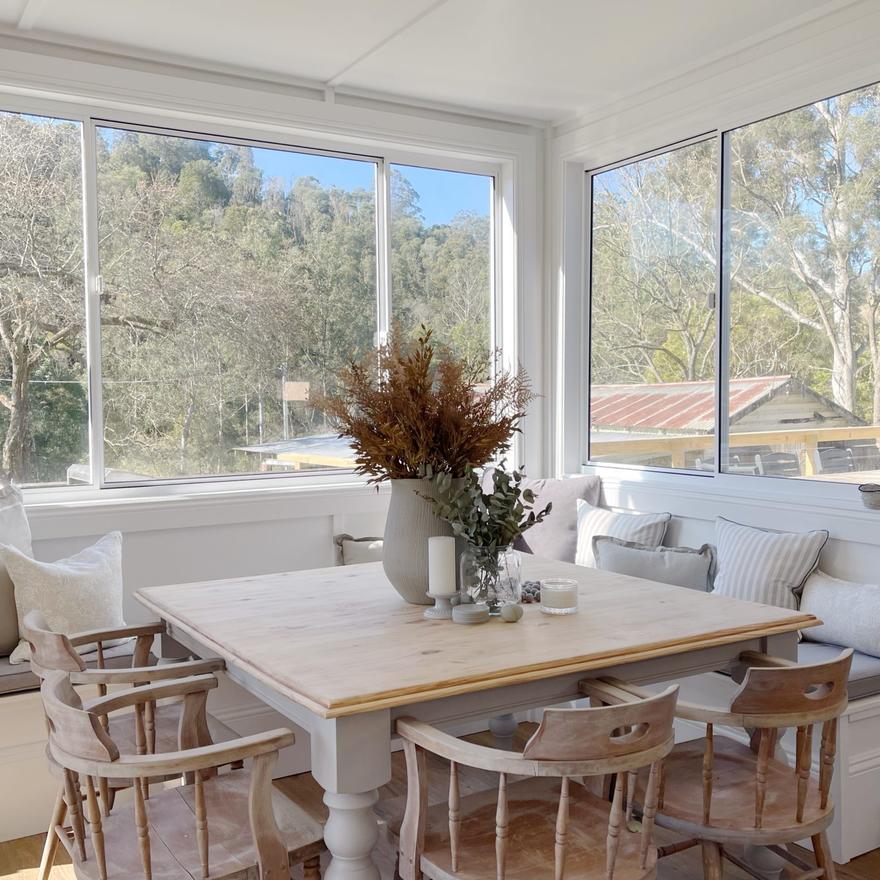
There's a particular quality that the best homes have — one that's difficult to name but immediately felt. It's a sense that the home belongs where it is. That it couldn't be anywhere else. That the light, the materials, the planting, the way the space opens to the outside — all of it is specific to this place, this landscape, this part of the world.
This quality is not accidental. It is designed. And it is one of the most undervalued principles in contemporary residential interior design.
The concept is called place-based connection, and it is one of the fourteen patterns of biophilic design identified in the research literature. It refers to the degree to which a built environment reflects and connects to the specific ecological, cultural, and geographic context in which it sits. And the evidence that it matters — for wellbeing, for belonging, for the felt quality of a space — is compelling.
WHAT PLACE-BASED CONNECTION ACTUALLY MEANS
Place-based connection is not about decorating with local motifs or hanging a map of the region on the wall. It is something more fundamental: the degree to which a home is in genuine dialogue with its specific location.
That dialogue happens through materials. A home that uses timber from local species, stone from local quarries, or clay from local soils is materially connected to its place in a way that a home finished entirely in imported or synthetic materials is not. The connection is not just aesthetic — it is sensory. Local materials carry the colour, texture, and thermal properties of the landscape they come from. They look right because they are right.
It happens through planting. A garden planted with species native to the local ecology creates a different relationship with the surrounding landscape than one planted with exotic species. Native plants attract local birds and insects. They respond to local rainfall patterns. They connect the home to the seasonal rhythms of the specific place it occupies.
It happens through orientation and opening. A home that is designed to engage with its specific landscape — that opens toward a particular view, that frames a particular tree, that captures the prevailing breeze — is in active dialogue with its location. A home that turns its back on its landscape, or that could be rotated 180 degrees without any meaningful change to the experience of living in it, has lost something important.
And it happens through the quality of light. The light in the Hunter Region is different from the light in Melbourne, which is different from the light in Broome. The angle of the sun, the quality of the atmosphere, the colour of the sky — these are specific to place, and a home that is designed to work with its particular light is a home that feels genuinely located.
WHY THIS MATTERS FOR HUMAN WELLBEING
The research on place attachment — the psychological bond between people and the places they inhabit — is substantial. Strong place attachment is associated with higher levels of wellbeing, greater sense of identity and belonging, lower levels of anxiety, and stronger social connection. People who feel genuinely at home in their homes — who feel that their home reflects who they are and where they are — report higher life satisfaction than those who don't.
This is not surprising when you consider the evolutionary context. Humans evolved in specific places. Our ancestors knew their landscape intimately — its plants, its animals, its seasonal rhythms, its dangers and its resources. That intimate knowledge of place was not just practical. It was existential. It was the foundation of safety, belonging, and identity.
The modern built environment has largely severed this connection. Homes are built from materials sourced globally, finished with products manufactured anywhere, planted with species from other continents, and designed to a generic standard that could be applied in any climate and any landscape. The result is homes that are comfortable in a narrow sense but disconnected in a deeper one — homes that don't know where they are, and that therefore can't fully support the people who live in them.
Restoring place-based connection is not about nostalgia or localism for its own sake. It is about recognising that humans are place-based creatures, and that the homes we live in are more restorative when they reflect and connect to the specific places they occupy.
WHAT THIS LOOKS LIKE IN THE HUNTER REGION
I work primarily in the Hunter Region, and the landscape here is specific and beautiful. The warm ochres and dusty greens of the bush. The blue-grey of the Brokenback Range. The quality of light — warm, golden, intense in summer, lower and more raking in winter. The native species: ironbark, spotted gum, grevillea, banksia. The birds: kookaburras, rosellas, currawongs, the occasional wedge-tailed eagle.
A home in the Hunter Region that draws on these elements — that uses local timbers, that plants native species, that opens toward the landscape, that uses a colour palette drawn from the local geology and vegetation — is a home that feels genuinely located. It has a quality of belonging that imported materials and exotic planting cannot replicate.
This doesn't mean every home in the Hunter Region should look the same. Place-based connection is not a style. It is a principle — one that can be expressed in many different ways, through many different design languages, while still maintaining a genuine relationship with the specific landscape.
What it does mean is that the design process should begin with the place. With an understanding of the local light, the local materials, the local ecology, the local climate. With a genuine curiosity about what this specific landscape has to offer — and a willingness to let that offering shape the design.
HOW TO BRING MORE PLACE INTO YOUR HOME
For most people, increasing place-based connection in their home doesn't require a renovation. It requires a shift in attention — a willingness to look at the specific place the home occupies and ask what it has to offer.
Start with planting. Replacing exotic species with local natives is one of the most impactful changes available. Native plants attract local wildlife, respond to local conditions, and create a garden that is in genuine dialogue with the surrounding landscape. They also tend to be lower-maintenance once established — they evolved for these conditions.
Look at your materials. Where possible, choose materials that are local or that reflect the character of the local landscape. Local timber. Stone with the colour and texture of the regional geology. Textiles in the colours of the local environment. These choices don't have to be expensive — they have to be intentional.
Consider your openings. Which views does your home engage with? Which does it ignore? Sometimes the most powerful place-based intervention is simply repositioning furniture to face a window that looks toward a tree, a garden, or a landscape feature that was previously overlooked.
Pay attention to the light. The specific quality of light in your location is one of its most distinctive features. Designing your home to work with that light — to capture it, to celebrate it, to let it move through the space in ways that feel generous and alive — is one of the most powerful ways to connect your home to its place.
And notice what's already there. Every home, in every location, has something specific to offer — a particular tree, a particular view, a particular quality of morning light. The practice of place-based design begins with noticing what's already present, and asking how the home can be in better dialogue with it.
THE BIGGER PICTURE
A home that knows where it is — that is in genuine dialogue with its landscape, its ecology, its light, and its materials — is a home that supports a deeper kind of belonging than one that could be anywhere.
This is not a small thing. Belonging is one of the most fundamental human needs. And the home, as the most intimate of all built environments, is one of the most powerful places to cultivate it.
Naomi Findlay is the founder of Findlay & Co., a boutique interior design practice specialising in biophilic wellness design. With a PhD in medical science and over 15 years of experience, Naomi designs spaces for how humans actually feel and live — not just how they look. Findlay & Co. offers in-person design services in the Hunter Region and online consultations Australia-wide.
Want to explore how your home could connect more deeply to where it is? Book a discovery call with Findlay & Co.
Want to know more about our services? Leave your details below