

What Indoor Plants Actually Do — And Why Most Homes Don't Have Enough of Them
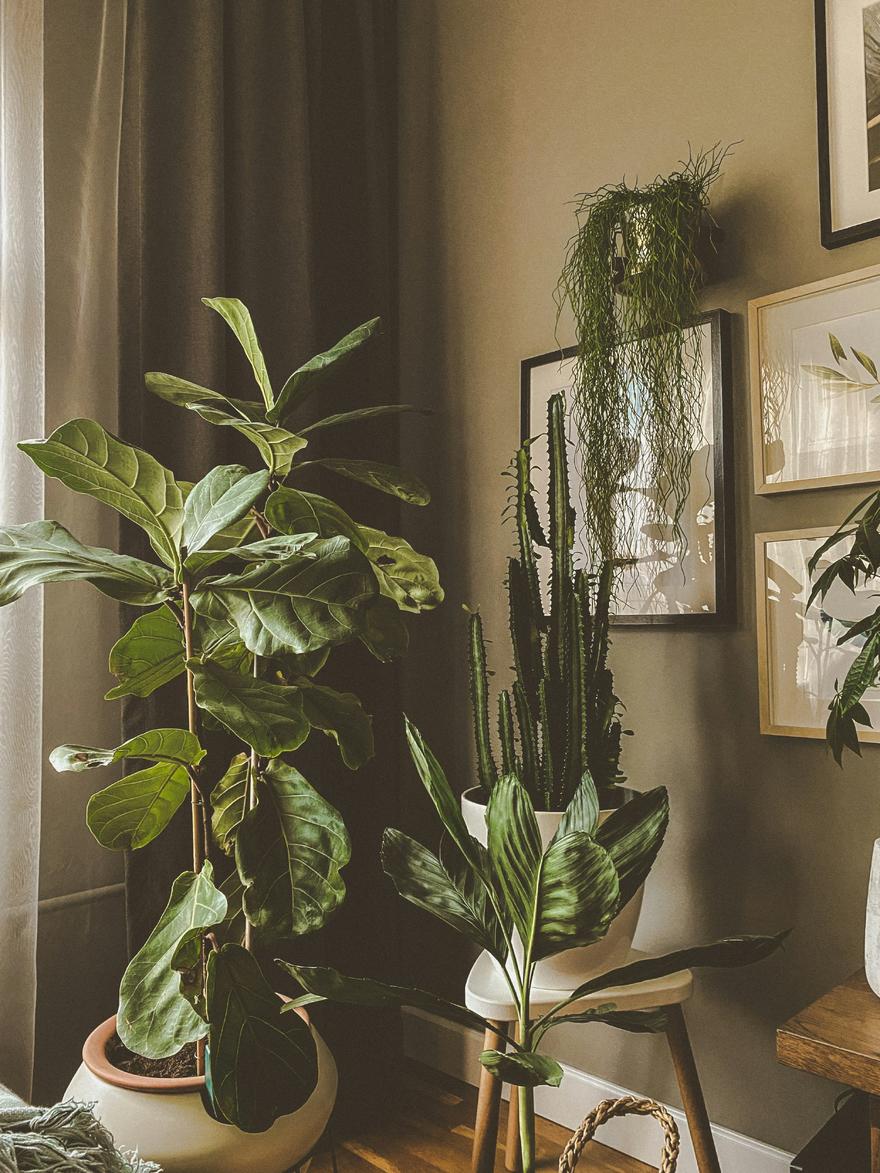
I want to start with something that might surprise you: the research on indoor plants is more interesting — and more nuanced — than the way it usually gets presented.
You've probably seen the headlines. Plants clean the air. Plants reduce stress. Plants make you happier. These claims are everywhere, and they're not wrong exactly — but they're incomplete in ways that matter. The actual science is richer, more specific, and more useful than the simplified version that tends to circulate online.
Understanding what plants actually do — and what they don't do — changes how you think about them as a design element. It moves them from decoration to intention. And that shift makes a real difference in how a home feels to live in.
WHAT THE RESEARCH ACTUALLY SAYS
The most cited study on plants and air quality is NASA's 1989 Clean Air Study, which found that certain plant species could remove volatile organic compounds (VOCs) — formaldehyde, benzene, trichloroethylene — from sealed test chambers. This study launched a thousand plant-as-air-purifier claims, and it's been repeated so many times that it's now treated as settled fact.
Here's what the study actually showed: in a sealed chamber with no air exchange, certain plants could measurably reduce VOC concentrations over time. What it didn't show — and what subsequent research has clarified — is that in a real home, with normal air exchange, you would need an impractical number of plants to achieve meaningful air purification through plants alone.
This doesn't mean plants don't affect air quality. They do. But the mechanism is more subtle than "plants clean your air." What plants do is contribute to a more complex, biologically active indoor environment — one that includes the microbiome of the soil, the humidity regulation of the leaves, and the presence of phytoncides (airborne compounds released by plants that have measurable effects on human immune function).
The stress reduction research is more robust. Multiple studies using physiological measures — cortisol levels, heart rate, blood pressure, galvanic skin response — consistently show that the presence of plants reduces stress markers. The effect is not dramatic, but it is consistent and replicable. Even brief exposure to plants — looking at them, being near them — produces measurable physiological changes in the direction of restoration.
The attention restoration research is also compelling. Attention Restoration Theory, developed by Rachel and Stephen Kaplan, proposes that natural environments — including indoor plants — support the recovery of directed attention capacity. In plain terms: being around plants helps the mind rest and recover from the kind of focused, effortful attention that modern life demands constantly.
WHY THIS MATTERS FOR HOW YOU DESIGN WITH PLANTS
Understanding the actual mechanisms changes the design approach.
If you're thinking about plants primarily as air purifiers, you might buy a few large specimens and consider the job done. If you understand that the benefits come from the cumulative presence of living, growing things — from the visual complexity, the humidity, the microbiome, the phytoncides, the gentle sensory stimulation of something alive and changing — you think differently about how many plants to include, where to put them, and what species to choose.
The research suggests that more plants, distributed throughout a space, produce stronger effects than a few large plants in one location. It suggests that plants in the places where people spend the most time — bedrooms, home offices, living spaces — are more valuable than plants in hallways or entry areas. And it suggests that variety matters: different species contribute different things to the indoor environment.
WHICH PLANTS ACTUALLY PERFORM
Not all plants are equal in a biophilic design context. The species that tend to perform best are those that are well-adapted to indoor conditions — that don't require constant intervention to survive, and that contribute meaningfully to the indoor environment without becoming a source of stress themselves.
A dying plant is not a biophilic element. A plant that requires more care than you can reliably provide is not a biophilic element. The goal is living, thriving plants — and that means choosing species that match your actual conditions and your actual capacity for care.
For low-light spaces: Zanzibar gem (ZZ plant), cast iron plant, peace lily, and various ferns perform well without direct sun. These are genuinely low-maintenance and genuinely resilient.
For spaces with good natural light: fiddle-leaf fig, monstera, rubber plant, and most succulents and cacti thrive with bright indirect light and relatively infrequent watering.
For bedrooms specifically: snake plant (Sansevieria) is often recommended because it continues to produce oxygen at night — unlike most plants, which switch to carbon dioxide production in the absence of light. The effect on air quality is modest, but the plant is also extremely low-maintenance and visually striking.
For humidity regulation: peace lily, Boston fern, and spider plant all contribute meaningfully to indoor humidity — which matters for respiratory comfort, particularly in air-conditioned spaces.
THE SOIL MICROBIOME — THE PART NOBODY TALKS ABOUT
One of the most interesting areas of emerging research on indoor plants is the role of the soil microbiome. The soil in a healthy potted plant is not inert — it's a complex ecosystem of bacteria, fungi, and other microorganisms that interact with the plant's roots and, through the air, with the indoor environment.
Research suggests that exposure to diverse soil microbiomes — the kind you get from healthy, living plants — may support human immune function and mental health through mechanisms that are still being studied. The connection between the gut microbiome, the immune system, and mental health is one of the most active areas of current research, and the indoor soil microbiome appears to be part of that picture.
This is not yet settled science. But it's a compelling reason to think of indoor plants not just as decorative objects, but as living systems that contribute to the biological complexity of the indoor environment in ways we're only beginning to understand.
HOW I THINK ABOUT PLANTS IN DESIGN
When I'm working on a home, plants are not an afterthought. They're part of the biophilic design framework from the beginning — considered alongside light, materials, layout, and sensory experience.
I think about where people spend the most time, and I prioritise plants in those spaces. I think about the light conditions in each room, and I choose species accordingly. I think about the maintenance capacity of the household — a family with young children and a demanding work schedule needs different plants than a retired couple with time to tend a more complex indoor garden.
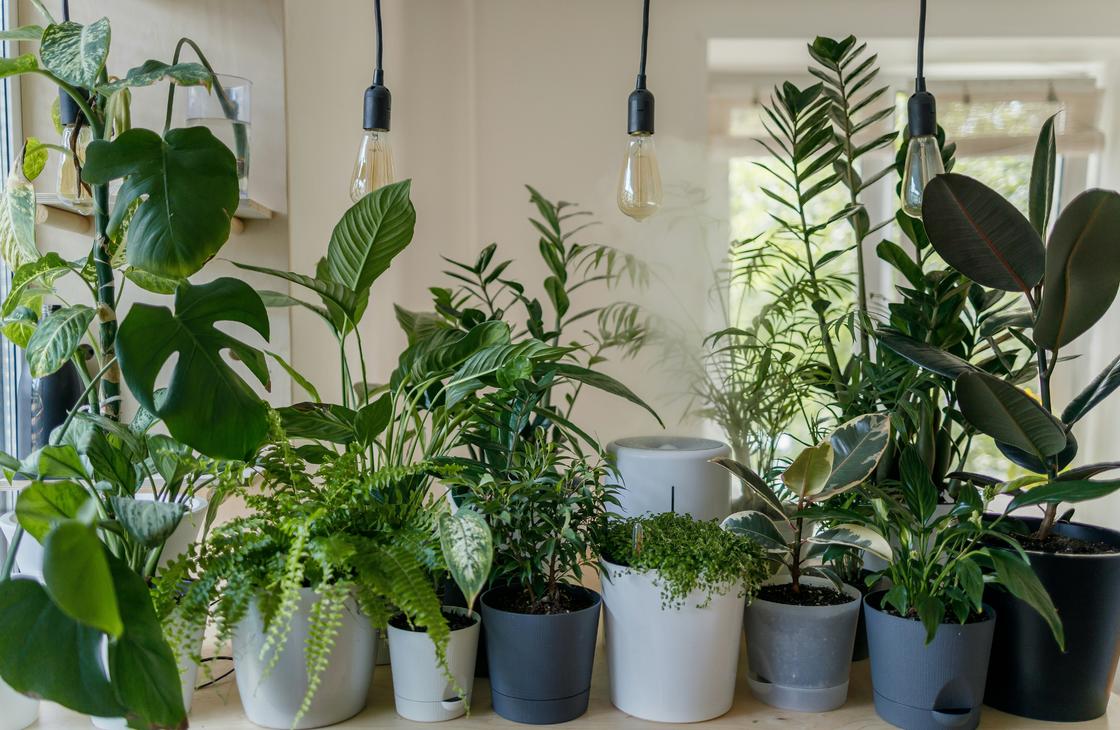
I also think about scale and distribution. A single large plant in a corner reads as decoration. Ten plants of varying sizes, distributed through a space, reads as environment. The goal is the latter — a space where the presence of living things is felt throughout, not concentrated in one spot.
And I think about the relationship between plants and other biophilic elements. Plants work best when they're part of a coherent whole — when the natural materials, the light, the sensory experience, and the living elements are all working together to create a space that genuinely supports the people who live in it.
A FINAL THOUGHT
The case for indoor plants is not that they will purify your air or solve your stress. The case is that they are living things, and living things belong in the spaces where humans live. Our nervous systems evolved in environments full of biological complexity — of growth, change, decay, and renewal. Indoor plants bring a small piece of that complexity back into the built environment.
That's not nothing. In fact, it's quite a lot.
Naomi Findlay is the founder of Findlay & Co., a boutique interior design practice specialising in biophilic wellness design. With a PhD in medical science and over 15 years of experience, Naomi designs spaces for how humans actually feel and live — not just how they look. Findlay & Co. offers in-person design services in the Hunter Region and online consultations Australia-wide.
Want to know how plants could work harder in your home? Book a discovery call with Findlay & Co.
Want to know more about our services? Leave your details below